Yes-Friends

Author name: admin

Uncategorized

NATO won’t back Trump’s new defense spending target but will raise its sights

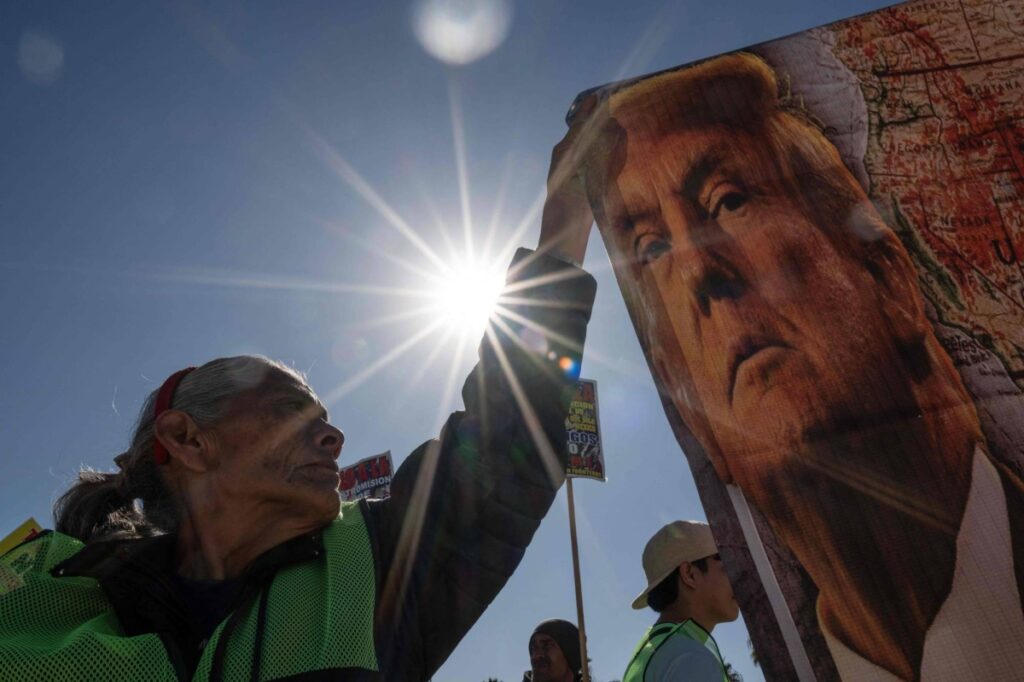
BRUSSELS – NATO won’t heed Donald Trump’s proposal for a massive hike in defense spending but will likely agree to go beyond its current target, according to officials and analysts. The U.S. president-elect declared on Tuesday members of the military alliance should spend 5% of gross domestic product (GDP) on defense — a huge increase from the current 2% goal and a level that no NATO country, including the United States, currently reaches. Trump’s comments — at a news conference that also generated a blizzard of headlines on Greenland, Canada and Panama — were a reminder of his focus on NATO spending during his first term and his threats not to protect allies that fail to meet the target. Source link

Uncategorized

Inside Mark Zuckerberg’s sprint to remake Meta for the Trump era

SAN FRANCISCO – Mark Zuckerberg kept the circle of people who knew his thinking small. Last month, Zuckerberg, the CEO of Meta, tapped a handful of top policy and communications executives and others to discuss the company’s approach to online speech. He had decided to make sweeping changes after visiting President-elect Donald Trump at Mar-a-Lago in Florida over Thanksgiving. Now he needed his employees to turn those changes into policy. Over the next few weeks, Zuckerberg and his hand-picked team discussed how to do that in Zoom meetings, conference calls and late-night group chats. Some subordinates stole away from family dinners and holiday gatherings to work while Zuckerberg weighed in between trips to his homes in the San Francisco Bay Area and the Hawaiian island of Kauai. Source link

Uncategorized

Politics, not climate, to drive sustainable finance trends in 2025

London – A turbulent year for sustainable finance is set to continue in 2025 as the return of Donald Trump as U.S. president heralds more regional divergence on everything from fund flows to legal cases and market regulations. Despite record high temperatures and more extreme weather events across the planet last year, the policy response by governments still remains too slow to meet the world’s near 10-year-old goal of limiting global warming. While regulators everywhere are gradually toughening up the rules that govern finance and companies in the real economy in an effort to cut climate-damaging carbon emissions faster, the pace of change is uneven with the U.S. already lagging Europe. A turbo-charged U.S. political backlash over environmental, social and governance-related (ESG) policies under Trump means that gap could widen even if, in many cases, the economics, companies’ near-term emissions reduction pledges and the rising costs of climate events keep the broad direction unchanged. “We anticipate that in 2025, we’ll see a resilience for sustainable investment globally, although it’s likely that there will remain core differences between the U.S. and Europe’s approach,” said Tom Willman, Regulatory Lead at sustainability tech firm Clarity AI. “In the U.S., we can expect a more conservative approach, with investors prioritizing long-term risk-adjusted returns to avoid potential political or reputational risks.” While just over half of U.S. executives expect new or expanded sustainability regulations this year, in Britain that figure is 60% and Singapore 80%, a December survey of 1,600 executives by Workiva showed. The U.S. political reality has already spurred some U.S. firms to curtail their climate and diversity efforts to avoid censure. In the latest sign of corporates changing tack, the biggest U.S. banks recently left a sector coalition aimed at cutting emissions. Legal pressure is also building on the world’s climate efforts. One in five climate litigation cases were not aligned with policies to reduce emissions, analysis last year by the Grantham Research Institute on Climate Change and the Environment showed. The majority of these were in the United States. The regional split was evident among sustainable investment in the year to the end of September, with U.S. funds seeing clients withdraw a combined $15.9 billion as European funds took in $37.3 billion, data from industry tracker Morningstar showed. The number of new ESG-focused funds launched in the United States, meanwhile, fell to just seven against 189 in Europe. Across the world, more sustainable funds were closed than launched for the first time, hit by the U.S. backlash, increasingly tough European Union rules aimed at forcing funds to evidence their sustainability credentials and market consolidation. Demand for sustainable funds lagged the broader market in part because of mixed performance, concerns around whether some funds were as green as they purported to be, regulatory uncertainty and the ESG backlash, said Hortense Bioy, Head of Sustainable Investing Research, Morningstar Sustainalytics. Despite an uncertain outlook given the potential for Trump to water down some ESG initiatives, for example government support for electric vehicles, many of the underlying market drivers of demand for sustainable finance, such as the need for green energy, remained, she added. Charles French, co-chief investment officer at Impax Asset Management, said despite Trump’s negative view on climate change — he has called it a hoax — companies in sectors from healthcare and industrials were eyeing climate tech solutions to cut costs. “The era of tech-inspired transformation is not coming to an end. In many areas, it’s just getting started,” he said. The amount of money raised through sustainable bonds also continued to rise in the Americas, up 16.9%, and Europe, up 10.7%, in 2024, data from LSEG showed. Given the competing pressures, Leon Kamhi, head of responsibility at asset manager Federated Hermes, said he expected investors to “mature” and focus on the impacts being achieved in the real economy. “For the transition to be successful, it is essential that such investments yield economic returns for both companies and investors alike.” Source link

Uncategorized

Top Japanese diplomat to visit Seoul to shore up ties amid political chaos

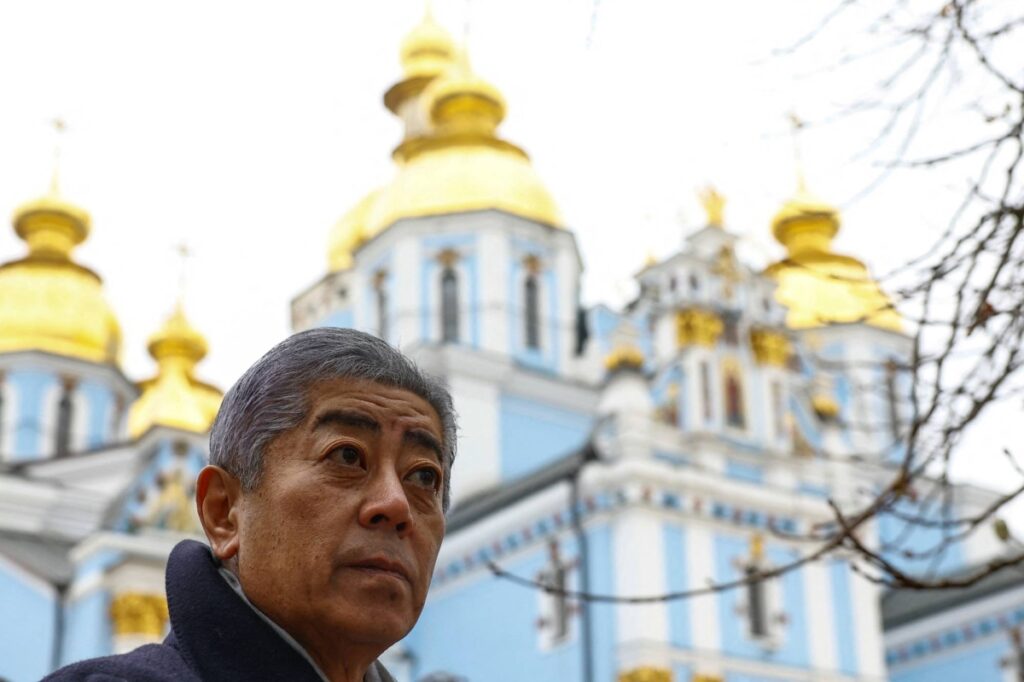
Foreign Minister Takeshi Iwaya will travel to South Korea on Monday to shore up security cooperation between the East Asian neighbors and their mutual U.S. ally that is meant to counter North Korea as well as China’s growing regional power. Iwaya, who will be the first Japanese foreign minister to visit Seoul in seven years, will meet with his South Korean counterpart Cho Tae-yul and Acting President Choi Sang-mok, the Japanese government said. Iwaya aims to “reconfirm” the importance of relations and that the two countries will continue to coordinate policies including those on North Korea in the “light of the current strategic environment,” it said in a statement. Source link

Uncategorized

Isekai anime offers a key to understanding globalization

While giant robots and magical girls were once among the most prominent tropes in anime, the isekai (otherworld) genre has dominated the landscape in recent years. These days, there are dozens of isekai shows available to peruse, and an ample slate of new episodes and series are set for release in 2025. With such a large quantity of titles, there’s considerable diversity in the genre, but the narrative typically revolves around at least one person from Japan (usually a salaryman or teenager) who is transported from their ordinary reality into another world — an isekai that often features the medieval settings of knights and dragons common in Euro-American fantasy fiction. Generally, the protagonist is killed and reincarnated or otherwise unwillingly summoned into this world, sometimes even getting trapped in fantasy video games. Unsure if they will be able to return, the protagonist goes about building a new life: Making friends, defeating enemies and in the process learning about the world they find themselves in. Commonly adapted to TV anime from lengthy light novels (a genre of young-adult Japanese fiction) and manga, isekai shows’ episodic format and longer narrative arcs allow such subplots to unfold. Source link

Uncategorized

Jannik Sinner declares innocence in doping case ahead of Australian Open

Melbourne – World No. 1 Jannik Sinner said Friday that he had done nothing wrong as ATP chairman Andrea Gaudenzi stressed that the Italian’s doping case was “run by the book” with no preferential treatment. Defending Australian Open champion Sinner twice tested positive for traces of the steroid clostebol in March. Sinner was exonerated by the International Tennis Integrity Agency, which accepted the explanation that the drug entered his system when his physio used a spray containing it to treat a cut, then provided massage and sports therapy to Sinner. Source link

Uncategorized

Israeli military tightens media rules over legal action concern

The Israeli military has placed new restrictions on media coverage of soldiers on active combat duty amid growing concern over the risk of legal action being taken against reservists traveling abroad. The move came after an Israeli reservist vacationing in Brazil left the country abruptly when a Brazilian judge ordered federal police to open an investigation following allegations from a pro-Palestinian group that he had committed war crimes while serving in the Gaza Strip. Under the new rules, media interviewing soldiers of the rank of colonel and under cannot display their full names or faces, similar to the rules that already exist for pilots and members of special forces units, Lt. Col. Nadav Shoshani, an Israeli military spokesperson, told reporters. Source link

Uncategorized

Record heat pushed 2024 above global warming threshold of 1.5 C

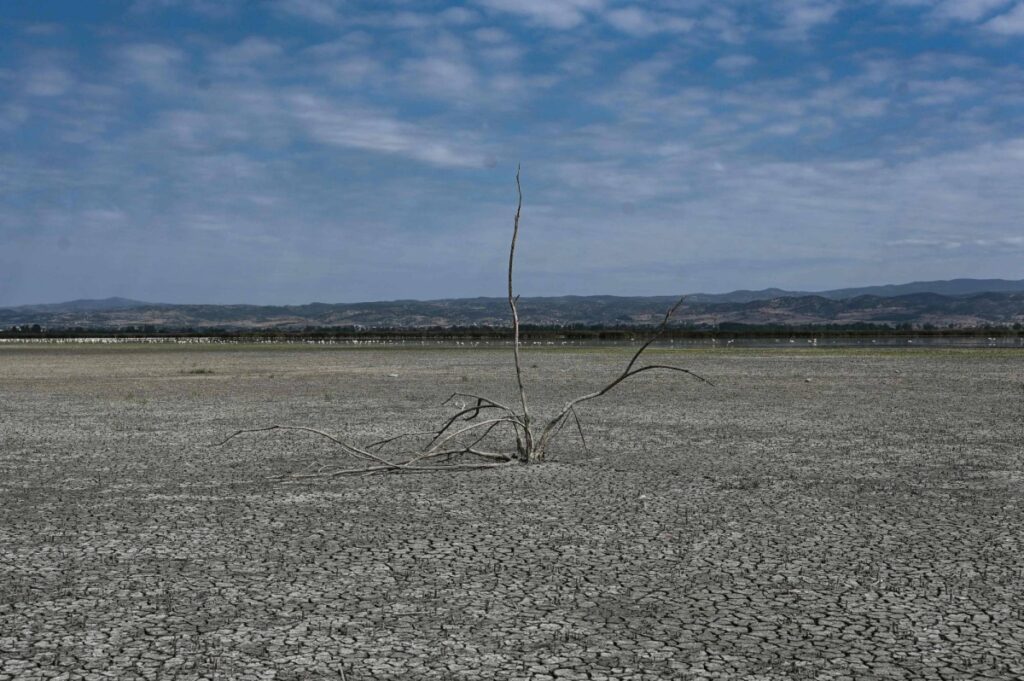
Earth’s warming exceeded 1.5 degrees Celsius on an annual basis for the first time in 2024, according to two major climate science agencies. It’s the most potent evidence yet that countries are failing to meet a Paris Agreement goal of limiting global heating to that level as a decadeslong average. The amount of time left to avoid eclipsing the goal “is now wafer thin,” Colin Morice, a U.K. Met Office scientist, said in a statement. Scientists sounded the alarm long before last year ended that 2024 would become the hottest year on record and almost certainly the first to surpass the 1.5 C limit. Now both of those milestones have been confirmed in official statistical releases from two independent scientific agencies. The EU’s Copernicus Climate Service measured the 2024 global average temperature to be 1.6 C above the preindustrial average, and the U.K. Met Office found to be 1.53 C above it. (Three other groups are expected to report Friday.) The clear acceleration in rising temperatures has puzzled scientists, even as the evidence of the fast-warming atmosphere became impossible to miss. The hottest day ever recorded happened on July 21, 2024 — a record that held until July 22. The planetary heat spike was made 2.5 times more likely by greenhouse gases, according to researchers. Typhoon Gaemi in Asia and Hurricanes Helene and Milton in the U.S., similarly juiced by climate change, killed hundreds of people and caused colossal damage. There was flooding across Africa’s Sahel and in southeastern Spain; drought in southern Italy and the Amazon River basin; wildfires in central Chile; and landslides in northern India. Hottest-year status puts 2024 in rarefied company. The warmest year up to now, by a substantial margin? 2023. But while the heat is clear, scientists are struggling to account for the speed of this recent jump. Something’s pushing up temperatures faster than expected, and the climate detectives have yet to agree on what. After months of research and debate, they have collected suspects — and already let a few go — in what’s become the greatest climate mystery in 15 years. “The science tells us that we should expect surprises like this,” said Sofia Menemenlis, a Ph.D. candidate in atmospheric and oceanic sciences at Princeton University. “This is not something that should be completely unexpected in the future, knowing what we know about global warming.” The landmark status for 2024 can be partly explained by the first five months coinciding with El Nino, a natural warm phase that supercharges global weather. But the planet is heating up so fast that even years with cooling trends, known as La Nina, are counted among the hottest of all time. The Met Office expects 2025 to be the third hottest, behind 2024 and 2023. In fact, the last 10 years are all ranked in the hottest on record, and all but one of the two dozen hottest years happened since 2000. There’s a simple rule of thumb that greenhouse gases combined with El Nino makes for an exceptionally hot year. But scientists doubt those two factors are enough to account for the recent runup in warming. And they’re debating whether this is a spiky blip in the record or the start of a more lasting acceleration. The ‘anti-hiatus’ For many experts, the mystery calls to mind the hotly debated “hiatus” in global temperatures from about 1998 to 2013, when temperatures seemed to plateau for a time. This prompted a deluge of studies in climate journals as well as public policy debates. But it was ultimately misleading: Postmortems concluded that natural variability, including a string of La Nina years, and incomplete Arctic data buoyed an illusion. When temperatures began climbing upwards again in the mid-2010s, and once scientists updated their data sets, the hiatus dissolved into thin air. “That isn’t going to be the case here,” said Gavin Schmidt, director of NASA’s Goddard Institute for Space Studies, who published an influential article in March that articulated his and colleagues’ concerns. With the current conundrum — call it the ‘anti-hiatus’ — scientists can point to physical reasons that are likely contributing to the fast-rising heat. They just don’t know yet which reasons are most important, or how long the trend will continue. “We have a lot more physically grounded reasons to think an acceleration is happening than we did to think the slowdown was happening during the hiatus years,” said Zeke Hausfather, a climate researcher affiliated with Berkeley Earth, a nonprofit that maintains one of the major temperature datasets. The global average temperature in 2023 reached 1.48 C higher than the preindustrial average, according to the EU’s Copernicus Climate Change Service. Greenhouse gas pollution and El Nino go a long way to explain that heat — about 1.23 C of it in 2023, some experts estimate — but there’s more to account for. The sun entered the brighter part of its 11-year cycle, adding less than 0.03 C. And a January 2022 volcanic eruption in the southern Pacific shot enough of the ocean skyward to raise the stratosphere’s heat-trapping water-vapor level by a record 10%. Initially considered a warming factor, the volcano gave off heat-reflecting sulfur aerosols that accorded the plume a slight net cooling event. In other words: a red herring. That leaves 0.2 C still unexplained. Sulfur’s cooling effect wanes Sulfur aerosols released by power plants and vehicles have a cooling effect on the atmosphere, canceling out as much as a third of humanity’s heat-trapping emissions historically. When environmental rules cut sulfur — as acid-rain restrictions have done since the early 1990s — it comes with the perverse tradeoff of letting more heat break through to the planet’s surface. Since international shipping regulations requiring low-sulfur fuels went into effect in 2020, scientists have seen a 74% drop in related sulfur aerosol emissions. That benefits human health, even at the short-term cost of temporarily higher temperatures. Similarly, 70% cuts to China’s sulfur pollution since its 2006 peak are reducing the overall atmospheric load — and

Uncategorized

Stage set for action-packed New Year Basho with yokozuna promotion battle

Few years in recent sumo history have begun with a landscape of possibilities as wide as 2025. It’s entirely conceivable that we could go from a sport that has just a single aging and ailing yokozuna on Jan. 1 to one with three yokozuna atop the rankings 28 days later. For that scenario to come to pass, all that might be required is a repeat of what happened in the November tournament — with just a reversal of fortune in the final bout. Source link

Uncategorized

Race circuit and resort among post-event proposals for Osaka Expo site

The site of the Osaka Expo, which kicks off in April on the artificial island of Yumeshima, may turn into an auto racing circuit or a resort facility with a luxury hotel after the six-month event is over. On Thursday, the prefecture and city of Osaka jointly announced two plans selected from proposals on what to do with the site of the expo, which is set run from April 13 to Oct. 13. One of the chosen proposals envisages an entertainment complex housing a circuit and a large arena, as well as other facilities such as hotels, a shopping mall and an amusement park. Source link

Scroll to Top