Yes-Friends

Author name: admin

Uncategorized

Mother arrested after three children die in Kanagawa Prefecture

Yokohama – A 49-year-old woman in Kanagawa Prefecture has been arrested for allegedly killing her son, 9, who was found dead along with two other children of the suspect. Upon returning to the family’s home in Kanagawa’s city of Ebina at around 10:55 p.m. on Sunday, the children’s father made an emergency call to firefighting and medical services reporting that the kids had sustained head injuries. The three children were confirmed dead after being rushed to the hospital. The mother, Atsuko Hayashi, was arrested by the Kanagawa police Monday on suspicion of murdering the son, Rei, an elementary school fourth grader, partly by beating him at the home at around 3:30 p.m. on Sunday. Hayashi, a corporate worker, admitted to the allegations. The other two children were the couple’s 15-year-old daughter, Riko, in her third year at a junior high school, and their second daughter, Mako, 13, in her first year at junior high school. Both girls also had head injuries. The suspect attempted to kill herself at the home, according to firefighting authorities. She was sent to the hospital and is not in a life-threatening condition. The prefectural police will investigate the deaths of the two girls, with suspected murder in mind. The couple and the three children were living on the second floor of the house, while their relatives are using the first floor, according to investigative sources. If you or someone you know is in crisis and needs help, resources are available. In case of an emergency in Japan, please call 119 for immediate assistance. The TELL Lifeline is available for those who need free and anonymous counseling at 03-5774-0992. For those in other countries, visit International Suicide Hotlines for a detailed list of resources and assistance. Source link

Uncategorized

Will the second Trump boom go bust?

LISBON – What could Donald Trump’s victory in the U.S. presidential election mean for the American and global economies? In a December 2016 commentary (titled “The Trump Boom?”), I argued that despite concerns about Trump’s personality and economic policies, it was entirely plausible that the United States could experience robust GDP growth during his presidency — albeit with a risk of higher inflation. For the “crime” of trying to be objective and suggesting that the U.S. economy might perform well under Trump, I was condemned by fellow economists and commentators, especially progressives. Many, including Nobel laureate and New York Times columnist Paul Krugman, instead predicted a global recession and an imminent stock market crash. Although I would not go so far as to predict a stock market collapse, my outlook for Trump’s second presidency is decidedly less optimistic. As in 2016, Trump is inheriting a strong economy, which he nonetheless insists on mischaracterizing as “terrible.” But he faces a more challenging economic landscape than he did in his first term, regardless of his domestic policies. Source link

Uncategorized

Drugs, scams and sin: Myanmar’s war has made it the global crime capital

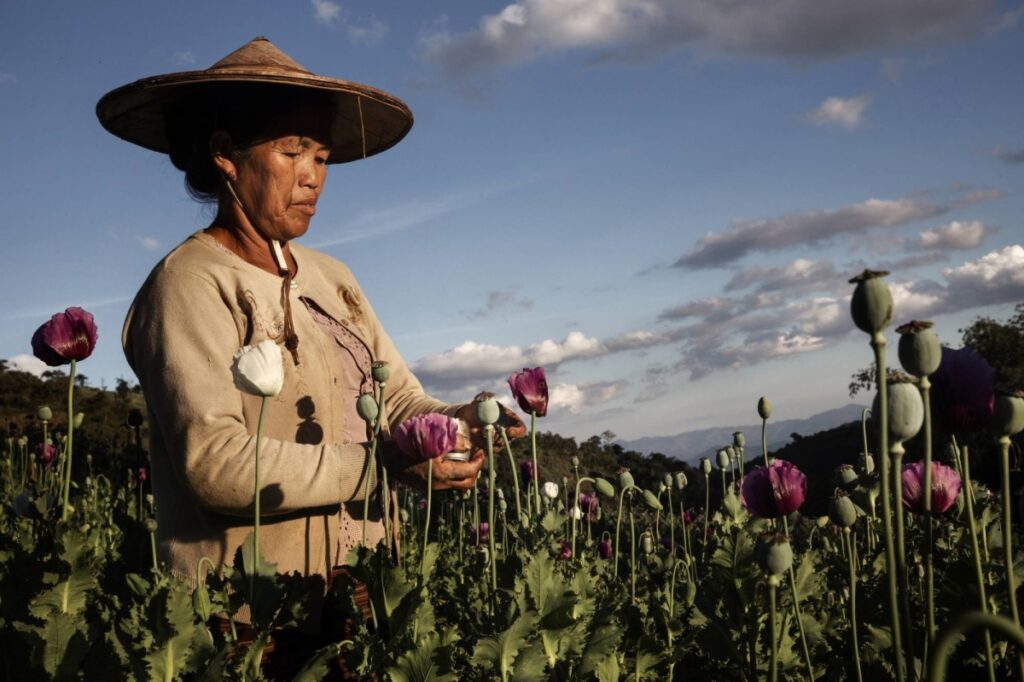
The flower fields stretch out from the mountain village along most every road — fluttering patchworks of white and pink and purple. The beauty in this corner of Shan state, in northeastern Myanmar, might seem a respite from the country’s brutal civil war. Instead the blooms are a symptom: It is all opium poppy in these fields, and Myanmar again ranks as the world’s biggest exporter of the raw material to make heroin and other opiates. And that’s just the beginning. Since descending into a full-blown civil conflict nearly four years ago, after the military overthrew the elected government, Myanmar has cemented its status as a hotbed of transnational crime. It is a playground for warlords, arms dealers, human traffickers, poachers, drug syndicates and generals wanted by international courts. Source link

Uncategorized

World greets 2025 after sweltering year of Olympics, turmoil and Trump

Sydney – Crowds will marvel at fireworks and toast champagne to greet 2025 on Tuesday, waving goodbye to a year that brought Olympic glory, a dramatic Donald Trump return and turmoil in the Middle East and Ukraine. It is all but certain 2024 will go down as the hottest year on record, with climate-fueled disasters wreaking havoc from the plains of Europe to the Kathmandu Valley. As New Year’s Eve parties kicked into gear along Australia’s picturesque Sydney Harbour on Tuesday afternoon, many revelers were relieved to see the past 12 months in the rearview mirror. Source link

Uncategorized

Social media companies face global tug-of-war over free speech

President-elect Donald Trump and his allies have vowed to squash an online “censorship cartel” of social media firms that they say targets conservatives. Already, the president-elect’s newly chosen regulators at the Federal Communications Commission and the Federal Trade Commission have outlined plans to stop social media platforms like Facebook and YouTube from removing content the companies deem offensive — and punish advertisers that leave less restrictive platforms like X in protest of the lack of moderation. “The censorship and advertising boycott cartel must end now!” Elon Musk, the owner of X, whom Trump has appointed to cut the federal budget, posted on his site last month. Source link

Uncategorized

The world is ever more angry. That is not good.

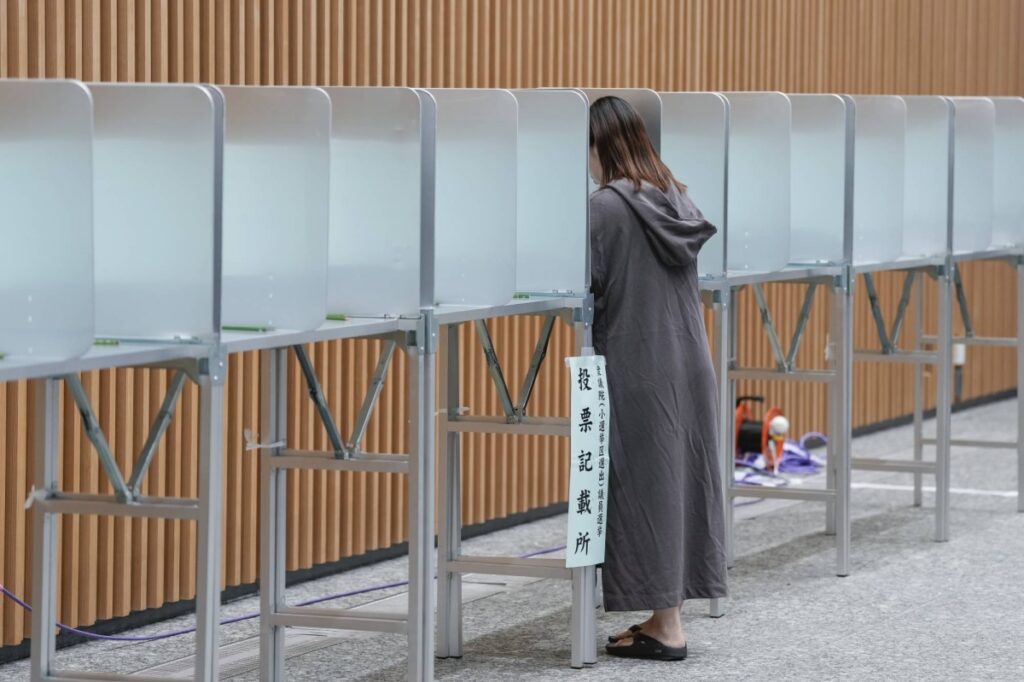
A vacuum has emerged in politics around the world. Elections in democratic countries across the globe last year were marked by a decisive rejection of incumbents. Dissatisfaction and anger are the defining features of contemporary politics and the result is untested and unstable governments whose primary focus is sating or redirecting that unhappiness away from themselves. That is a recipe for unrest. Welcome to 2025. Source link

Uncategorized

The bond between the Japanese and animals as seen in ukiyo-e

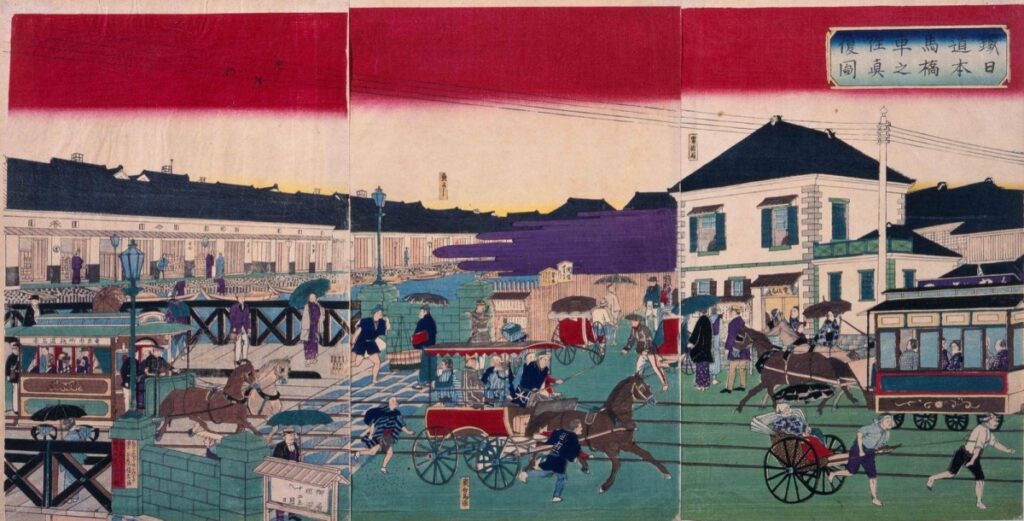
This is a sponsored story, created and edited exclusively by Tokyo Metropolitan Government’s Tokyo Updates website. What kind of relationship did Japanese people and animals have during the early modern Edo Period (1603-1868)? There is an exhibition that explores this historical relationship through ukiyo-e (traditional woodblock prints and paintings) and crafts, titled “Animals, Animals, Animals! From the Edo-Tokyo Museum Collection,” and it is currently touring Japan. We asked Shuko Koyama, the curator behind the exhibition from the Edo-Tokyo Museum, about what the works reveal of the lives of people and animals during that time. How Japan surprised an American zoologist In 1877, a visiting American zoologist named Edward S. Morse was surprised to see how kindly people treated animals in Tokyo. “It was unimaginable in the USA that rickshaw drivers would go out of their way to avoid cats and dogs on the street. He was also intrigued by people referring to cats with ‘-san‘ (a Japanese honorific used generally for addressing people),” says Koyama. This kind of relationship with animals is still fairly normal in modern-day Japan. “A Collection of Happiness, Customs in the East: ‘Lucky Mice’” (1890) by Yoshu Chikanobu, portraying women playing with white mice, which were said to bring good fortune | Courtesy of Edo-Tokyo Museum Keeping small animals was one of the pleasures common people in the Edo Period enjoyed, but surprisingly, mice were also cherished as pets. “Back then, people kept mice like we do now with hamsters. They were considered messengers of Daikokuten, the god of good fortune, and were appreciated by people,” Koyama explains. “The exhibition is entirely from the Edo-Tokyo Museum’s collection,” said Koyama. | Yoko Akiyoshi On the other hand, they were also a nuisance: There is a story that mice ate up all the rice in a house, leading to the downfall of that family. “Animals are not just cute. Their relationship with humans is a little more complicated than that. They are cute, but sometimes they also cause trouble. You must accept that in order for things to go smoothly.” Why did people refer to cats with ‘-san’? Cats were also popular, but they were “more than just cute creatures,” Koyama says. “There are many legends of bakeneko (monster cats) in Japan. Even long ago, people must have felt that cats are not only cute but mystical, too. They were also somewhat revered, as there is some folklore including cats that could understand human language. I believe they were referred to with ‘-san’ for these reasons.” “One Hundred Famous Views of Edo: Procession for the Tori-no-ichi Festival, Asakusa-tanbo” (1857) by Utagawa Hiroshige, a popular work at the exhibition portraying a cat looking out through a window. | Courtesy of Edo-Tokyo Museum We can also deduce that cats were special from the technique used to depict them. “In ukiyo-e, cats are portrayed with a printing technique that makes them seem three-dimensional. If you look at the prints in person, you can see how fluffy they appear.” You may wonder, “What about dogs?” “In Edo (the city, now Tokyo), there were not many people who kept dogs as a personal pet. There were so-called machi-inu (town dogs), that were taken care of by the entire town. They served as guard dogs for the town, played with the children and were fed by the townspeople. Ukiyo-e from the Edo Period often include machi-inu.” “Funabashiya Confectionery in Sagacho, Fukagawa” (1839-1841) by Utagawa Kuniyoshi, portraying dogs that were part of the community | Courtesy of Edo-Tokyo Museum Works from the Edo Period also include various wild animals such as deer, cranes, storks, and Japanese river otters. “There is a record that the third shogun, Tokugawa Iemitsu, hunted as many as 2,135 deer in a year and a half. Although the Japanese river otter is not in paintings, the 1824 book ‘Buko Sanbutsu Shi’ (List of Animals and Plants Found in and Near Edo) says that the now-extinct animal was living at the Genmori Bridge. This is a bridge known as a photo spot for Tokyo Skytree in Sumida City. Two hundred years ago, Japanese river otters swam under that bridge. Isn’t it interesting?” French people’s impressions of the exhibition This exhibition is an expansion of the exhibition held at the Japan Cultural Institute in Paris in 2022, titled “Un bestiaire japonais — Vivre avec les animaux à Edo-Tokyo (XVIIIe-XIXesiècle)” (A Japanese Bestiary — Living with Animals in Edo-Tokyo During the 18th-19th Centuries). What was the response in France? “One of the things that attracted attention was a notice board related to the Edicts on Compassion for Living Things issued during the reign of the fifth shogun, Tokugawa Tsunayoshi. It states that anyone who abandons a sick horse that is not expected to recover will be punished by death. “Quail Meeting” (late Edo Period) by an unknown artist, portraying one of the quail singing contests that became popular as the number of fans increased starting in the early Edo Period | Courtesy of Edo-Tokyo Museum In Europe, animal welfare has become widely established only in recent years, but they were surprised and said that they had never heard of someone like a shogun giving such an order in that era,” Koyama said. This echoes the experience of Morse, who was surprised by the amicable relationship between Japanese people and animals. French people also had an interesting take on the status system during the Edo Period. “They were surprised by a piece that portrays a quail singing contest because bird owners were all sitting together regardless of status, with no separation between samurai with katana and merchants. It was interesting for the French to see the equal relationship between people when it came to entertainment.” Rare animal shows became popular The exhibition includes many paintings that portray shows of rare animals such as elephants, camels, tigers and leopards. “The Edo Period saw a rapid urbanization. By the 18th century, Edo had become a city with a population of over one million, and the field

Uncategorized

Great things can grow in small places

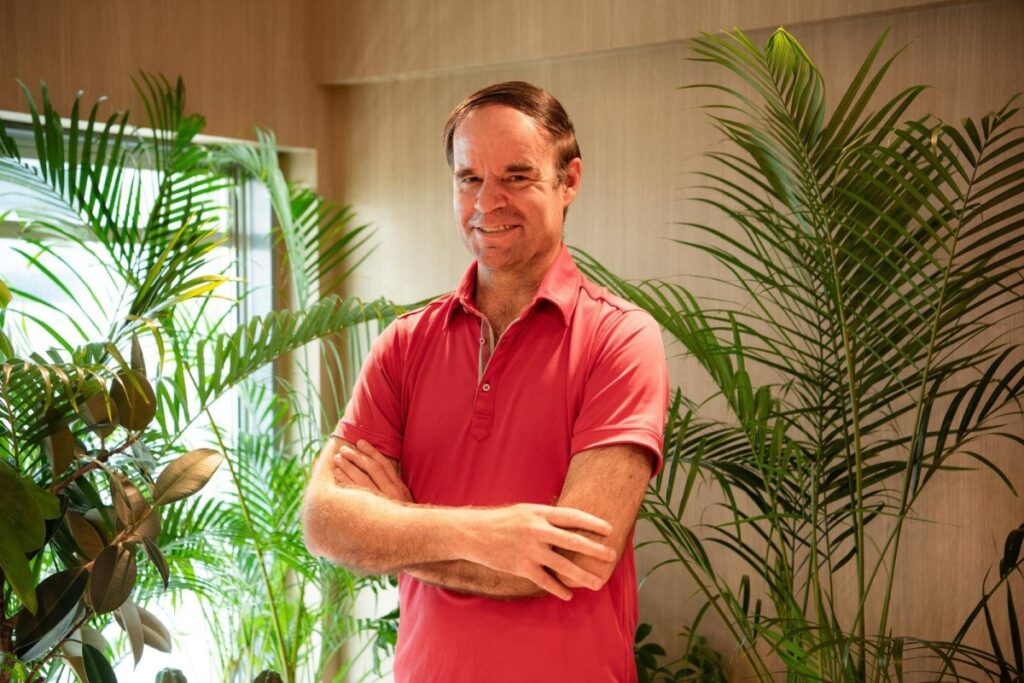
This is a sponsored story, created and edited exclusively by Tokyo Metropolitan Government’s Tokyo Updates website. Only a few generations ago, sowing seeds and harvesting one’s own food was common knowledge in Japan. However, in recent years, as the rate of urbanization has increased, the practice of growing food at home has withered somewhat. But Tokyo-based urban farmer Jon Walsh does not believe this has to be the way. No matter the distance, love can bloom Love brought Walsh to Tokyo back in 2002 when a simple pen-friend exchange with a Tokyo native, Harumi, turned into something more. “We began writing letters in 1995,” Walsh tells us, “Then we got into sending emails, and then we started calling each other between Auckland, New Zealand and Tokyo.” In a time before WhatsApp and Zoom, that racked up quite the bill, “There was one month in 1999 where her monthly phone bill was ¥90,000,” he said, adding, “I could buy a ticket for her to come from Tokyo to Auckland for that.” Eventually, they found a solution: “One of us should move.” It was Walsh who took the risk and uprooted himself, and it paid off, as Walsh and his wife have now been married for 21 years. Other than love, Walsh came to Tokyo with nothing, unable to make his former IT career work here due to a lack of Japanese language skills. Stuck in a tough spot, he remembered he was a strong writer in high school, and in just a few months he found himself working as a proofreader, then writer, for the bilingual publication Hiragana Times. Walsh has shared his love for urban farming with international schools across Tokyo, hoping to inspire the next generation of urban farmers. | Courtesy of Jon Walsh Years later, in 2011, Walsh was working from his sixth-floor office in Tokyo when he felt the 9.0 magnitude earthquake hit Tohoku. The event itself scared Walsh, but it sparked a new worry, “I thought, if a really big earthquake hits Tokyo, which it could at any time, supermarkets could be down, roads blocked, so where would we get our food from?” He did not have an immediate answer but knew that as a father to a then three-year-old daughter, there would be nothing worse than not being able to feed her. So, a year later, he decided to take food production into his own hands. A city with growing potential As a writer, Walsh had a knack for bringing words to life. As a farmer, he had the same knack with vegetables. He started small, buying some spinach seeds, a pot, and some soil and within a few weeks he saw leaves sprouting. “It felt like magic,” Walsh recalled, “So I bought some more pots, some seeds, and within a month I had a small herb garden.” Walsh and his family live in Akatsuka, in Tokyo’s northern Itabashi City, where his wife grew up. Once an area filled with rice paddies, Akatsuka has become increasingly urban. The area still holds some remnants of its former farming days, with community plots available for rent. Jon was encouraged by his wife, whose father used to grow his own produce, to rent one of these plots. Here, Walsh grew an abundance of tomatoes, cucumbers, lettuce, and herbs, more produce than his own family could eat. “I began giving food away to the next-door neighbours and friends,” Walsh said, “I had become a food producer in Tokyo, and I was just amazed that by cooperating with nature I could grow so much, even in this metropolis.” Sometimes in Tokyo, especially in the more suburban areas, local people, more commonly the older generation, will grow plants in pockets of free space, but in many cases they only plant flowers. Of this, Walsh says, “Many people could grow food if they simply changed the plant. There’s a lot of potential to grow edible plants in Tokyo, especially on roofs, even on walls. As long as the sun shines there, you can grow food.” Bringing farming to a new generation Walsh shared his methods with his daughter, who picked up the basics quicker than he thought possible, and it gave him an idea. “I got in touch with the founder of Tokyo International School and asked him if his school grew any crops. He said they didn’t, but he was interested, and I was invited in.” At the school, Walsh demonstrated just how easy it was to grow food and, after seeing how much the students enjoyed the class, he was invited to work part-time teaching urban farming. This was the start of something big for both Walsh and the school, where he still teaches more than 12 years on. Since then, his urban farming business, Business Grow, has blossomed, “I’ve now got two staff that have been working for me since 2021,” he tells us, “And my team has now taught over 1,500 students at 19 different international schools around Tokyo.” Working with schools and the NPO, Second Harvest Japan, Walsh has helped provide the residents of Tokyo most in need with fresh, healthy produce. | Courtesy of Jon Walsh One of the benefits Walsh has seen from his time teaching is the independence and confidence it gives to students, “When it comes to the schools where I’ve been teaching, our students have been going home and starting gardens and teaching their parents how to grow food.” While the student’s grandparents likely grew their own produce in the past, the convenience of urban living means that their parents have not, so now children have the opportunity to become the teachers, taking this “new” knowledge home and sharing it with their family. Walsh loves to see this, adding, “In the standard teaching scenario, the teacher is always older and the students are normally younger. But I teach students how to become teachers.” Walsh and his team are now helping schools produce so much food that they are encouraging the students


Uncategorized

20 U.S. Major League teams eager to interview Roki Sasaki

Los Angeles – Twenty U.S. Major League Baseball teams have expressed hopes of interviewing Japanese pitcher Roki Sasaki, who aims to play in the United States using the posting system, his agent, Joel Wolfe, told reporters online on Monday. Wolfe stopped short of disclosing details. U.S. media reports have said that the 23-year-old right-hander from the Chiba Lotte Marines, a Japanese professional baseball team, met with officials from such MLB teams as the Los Angeles Dodgers and the New York Yankees. Sasaki, well known for his fastball and forkball, has held interviews in Los Angeles with some teams since around mid-December. Each team gave Sasaki explanations within two hours using tools including videos and the PowerPoint presentation program. Sasaki asked some questions. The player wanted to meet with representatives from MLB teams at the same place and under the same conditions, Wolfe said, adding that he treated all teams he met equally. All teams must have felt that they have a chance to sign a deal with him, Wolfe also said. Sasaki returned to Japan after ending the series of meetings in the United States. He may fly to the United States again and visit the home cities of candidate teams. The deadline for negotiations is Jan. 23. Sasaki joined the Marines, a team in the Nippon Professional Baseball Organization, or NPB, as the team’s first draft pick for 2019. Until the 2024 season, he notched 29 wins and 15 losses, with an earned run average of 2.10. Sasaki pitched a perfect game in 2022, becoming the first NPB pitcher to achieve the feat in 28 years. Source link

Scroll to Top