Yes-Friends

Author name: admin

Uncategorized

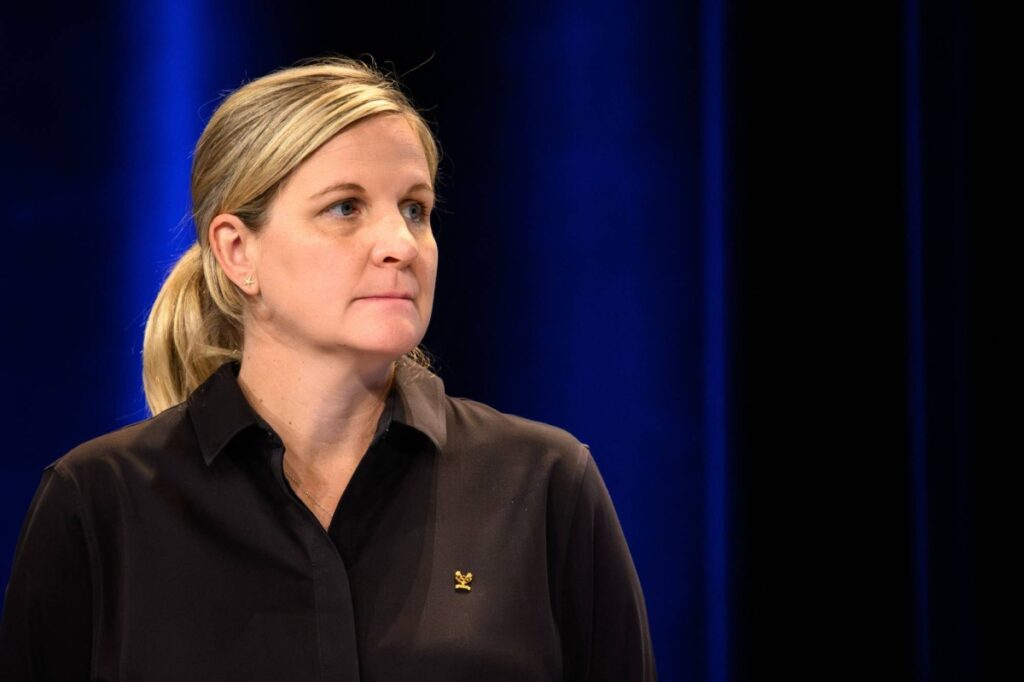
Kirsty Coventry hopes to make waves in IOC presidential race

Paris – Former swimming great Kirsty Coventry says she sees no problem in being a candidate to become the most powerful person in sport despite being a minister in the Zimbabwean government whose election in 2023 was described as neither “free nor fair.” The two-time Olympic gold medalist — she has seven medals in all — has been sports minister of the southern African nation since 2019 and was reappointed in 2023 by President Emmerson Mnangagwa. She is one of seven candidates bidding to succeed Thomas Bach as president of the International Olympic Committee (IOC), and if successful she would break the glass ceiling by being both the first woman and first African to be elected. Source link

Uncategorized

In meat- and fish-loving Japan, veganism is making a comeback

This story was produced by Grist and co-published with The Japan Times. All is quiet at 10:30 a.m. on a Thursday in Shibuya, Tokyo’s famous commercial district. In an alleyway just steps from one of the busiest train stations in the world, a short line of tourists huddles outside of a bar. Finally, half an hour later, the door cracks open and, greeted with a soft “irasshaimase,” or “welcome,” the parties shuffle in to sample one of the rarest dishes in Japan: faux-fish sushi. “Nowadays, there are many vegan ‘meat’ products,” said Kazue Maeda, one of the four founding employees of the restaurant, Vegan Sushi Tokyo. “But I’m Japanese. What I really used to love is sushi and salmon.” Her restaurant attempts to fill a relatively unclaimed niche in the local food scene. Even in Tokyo, where much of the country’s vegan population lives, plant-based versions of traditional Japanese food remain challenging to find — most vegan options are Western-inspired dishes like curry rice or vegan hamburg steak. Vegan Sushi Tokyo is open only for lunch: Although rave reviews keep pouring in from customers, the small business still doesn’t have a storefront of its own and rents out the interior of a bar by day. It serves 10-piece nigiri lunch sets, which include a plant-based Japanese-style “egg,” “shrimp” tempura and beads made out of seaweed that look nearly indistinguishable from salmon roe. Japan’s culinary culture may be rich and diverse, but it remains reliant on animal products, especially when dashi, a savory broth made of dried tuna flakes and kelp, is present in so many dishes. Maeda became a vegan six years ago, due to her growing concern over environmental and animal rights issues. It’s a familiar origin story for those who have come to defy the typical Japanese diet by giving up meat, fish and dairy. “In terms of the vegan movement, I think we’re maybe behind other countries. The number of vegans is very small,” Maeda said. “But there are more and more vegetarian and vegan restaurants in Tokyo, I think because of tourists — especially from countries with many vegetarian people.” Nigiri served at Vegan Sushi Tokyo. Although rave reviews keep pouring in from customers, the small business still doesn’t have a storefront of its own, and rents out the interior of a bar by day. | Sachi Kitajima Mulkey / Grist Outside large cities like Tokyo, Osaka and Kyoto, vegan options quickly vanish. In a culture that prizes convention and scrupulous attention to detail, individual accommodations — like vegan menu substitutions — are often frowned upon. And as in many other countries, vegan options are sometimes stigmatized as less nutritious. But recently, things have been changing. The anticipation of a tourism boom for the 2020 Olympics in Tokyo pushed the Japanese government to encourage new vegan businesses and menu options in major cities. And in the years since, restaurants like Maeda’s have sprung up, offering novel adaptations of traditional dishes. Under pressure from Japan’s pledge to nearly halve its carbon emissions by 2030, the government has also begun collaborating with vegan activists and advocates and awarding grants to alternative protein startups. Though challenges remain, it’s gotten easier and easier to go vegan in Japan over the last decade. “Climate issues and animal issues are growing,” Maeda said. “For me, I can’t imagine going back to eating meat again.” Only for tourists? Convincing people to eat less meat is key to reaching international climate goals. Up to 20% of planet-warming greenhouse gases emitted annually come from animal agriculture alone — all the cows, pigs, lambs, chickens and other animals (not including fish) that people raise for meat, milk, eggs and the like. According to one study from the University of Oxford that looked at the diets of over 55,000 people, vegans — defined as those who eschew all animal products — create 75% less climate pollution through their food choices than those who eat a meat-heavy diet. For most of the last two millennia, the Japanese diet was a model of climate-friendly eating due to Buddhist and Shinto objections to meat and dairy consumption — although fish has long been a staple. Beginning in 675, meat-eating was banned by official imperial decree. Kazue Maeda, co-founder of Vegan Sushi Tokyo, serves customers at the restaurant, where the recommended lunch set includes a tray of faux-fish sushi. | Sachi Kitajima Mulkey / Grist The ban set the stage for the flourishing of shōjin ryōri, a traditional cuisine that arrived in the sixth century along with Buddhism and aligns with the religion’s prohibition against killing animals. In the 13th century, the cuisine developed into a spiritual movement focused on simplicity and balance between one’s mind and body. A typical shōjin ryōri set meal is vegan, highlights seasonal produce and is designed around sets of five — five colors, five flavors and five cooking methods. While it can still commonly be found in the dining halls of Buddhist temples, modern chefs have taken shōjin ryōri into the mainstream, including in Michelin-starred restaurants, where they emphasize the concept’s focus on harmony with nature by using local ingredients and minimizing waste. It wasn’t until 1872 that Emperor Meiji lifted the meat-eating ban, seeking to usher in an era of westernization. Meat consumption grew quickly as domestic beef production boomed and animal products became a symbol of power and status. As reports spread that Emperor Meiji drank milk twice a day, dairy consumption became more popular, too. Today, Japan ranks 11th in beef consumption globally, and its per capita milk consumption is 68% higher than that of the average East Asian country. Japanese people buy eight times more meat than they did in the 1960s, and in 2007, families began eating it more than fish. But interest in plant-based foods appears to be growing. Japan’s market for plant-based foods tripled between 2015 and 2020, and the Ministry of Agriculture, Forestry, and Fisheries expects it to double again by 2030. These shifts have taken

Uncategorized

Japanese ministry opens door to taboo corporate takeovers

Guidelines issued by the industry ministry in 2023 have opened the door for companies to launch takeover bids without the consent of the companies being acquired, which was widely considered taboo in the country. The guidelines for action on corporate takeovers require companies to consider any “serious” takeover proposals that could improve their corporate value. The term “nonconsensual takeovers” is used, rather than “hostile takeovers,” in an apparent bid to reduce the sense of a taboo. In Japan, it used to be common for takeover bids to be launched after both sides reached an agreement in behind-the-scenes negotiations. The number of nonconsensual takeover bids has started to rise, however. Source link

Uncategorized

Japan begins feeling the pain of BOJ rate hikes more concretely

Japan is feeling the impact from higher interest rates on a more personal level, according to an analysis of social media activity following the central bank’s latest policy decision. After the Bank of Japan raised borrowing costs for a third time under Gov. Kazuo Ueda last week, about 80% of comments on YouTube were negative and dominated by concerns about housing loans and inflation — issues that directly affect people’s day-to-day lives. That’s according to an analysis by Tomoki Fukuma, CEO of TDAI Lab, a startup backed by Tokyo University that conducts sentiment analyses. Source link

Uncategorized

Japan #MeToo survivor says media are failing in wake of Fuji TV scandal

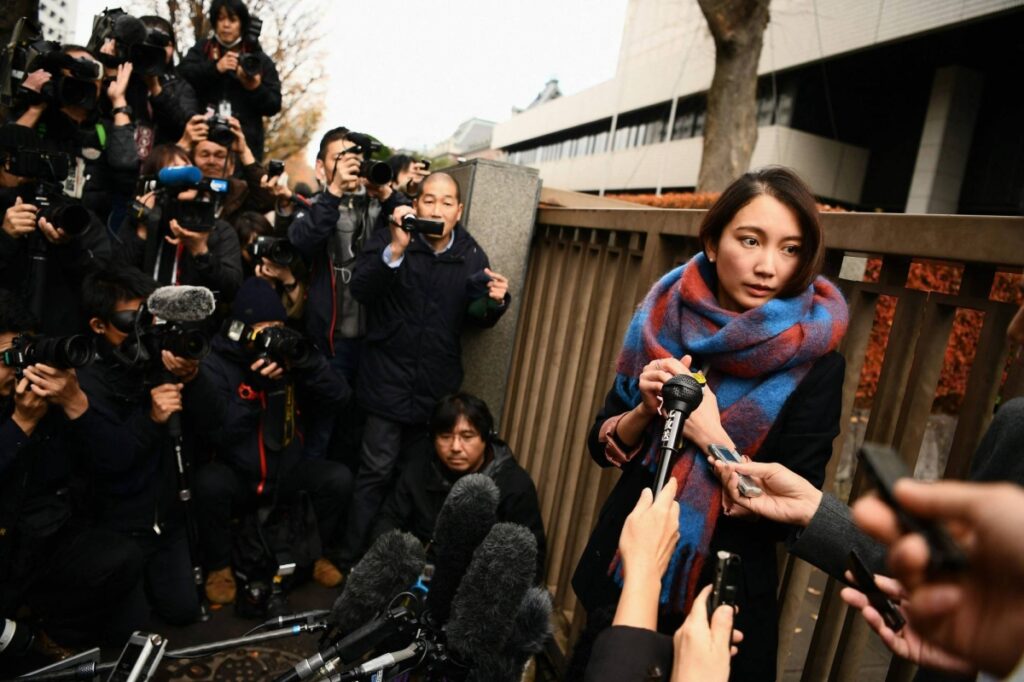
Japanese media are still failing to report sexual assault cases properly, a key figure in the country’s nascent #MeToo movement said in the wake of the scandal surrounding celebrity Masahiro Nakai and Fuji TV. Former boy band star Nakai was accused in a tabloid last month of sexually assaulting a woman in 2023, allegedly paying her some ¥90 million (about $570,000) as she signed a nondisclosure agreement. The furore culminated last week with Nakai, 52, one of Fuji Television’s most famous hosts, announcing his retirement. Source link

Uncategorized

DeepSeek shows China playbook for even bigger U.S. shock on chips

The success of DeepSeek’s new artificial intelligence model points to how China might eventually achieve an even bigger technological breakthrough in the face of U.S. export curbs: Producing its own cutting-edge chips. As tech leaders and politicians marvel at DeepSeek’s apparent ability to build an innovative AI model without spending nearly as much as rivals in the U.S., a development that roiled markets on Monday, the question now is how exactly the Hangzhou-founded company pulled it off — and what it means for American efforts to stay ahead of China in the tech race. While much remains unclear, such as the exact chips DeepSeek used and whether it has enough on hand to further develop its AI models, its success highlights some of China’s key advantages. The country has a deep pool of highly skilled software engineers, a vast domestic market and government support in the form of subsidies as well as funding for research institutes. It also has a pressing necessity to find a way to do more with fewer resources. Source link

Uncategorized

Arsenal boss Arteta urges stop to abuse after red card rescinded

Arsenal manager Mikel Arteta was pleased that Myles Lewis-Skelly’s red card was rescinded but criticized the abuse aimed at referee Michael Oliver by fans. The 18-year-old Lewis-Skelly has escaped a three-match suspension after the FA overturned Oliver’s decision to send him off in Saturday’s 1-0 win at Wolverhampton Wanderers. Lewis-Skelly was dismissed for tripping Wolves’ Matt Doherty on a counterattack before halftime and the dismissal, which was upheld by VAR, was criticized by fans and pundits. Source link

Uncategorized

Russia set to test New Delhi by sending sanctioned oil and tankers to India

Russia is sending cargoes of sanctioned oil to India on tankers that have been designated by the U.S. Treasury — setting up an acid test of Moscow’s ability to get around aggressive measures imposed by Washington earlier this month. Three shipments of heavily sanctioned Arctic oil are all being carried to the South Asian country’s ports on tankers that were designated by the U.S. Treasury on Jan. 10. In the Pacific, at least two cargoes from Sakhalin Island also appear to be on the way to India, having spent time on U.S.-listed vessels. India has indicated that it would only allow sanctioned tankers that loaded before Jan. 10 into its ports — provided they get there before Feb. 27. All five shipments collected their consignments after Jan. 10. Source link

Uncategorized

Scientists race to gauge Los Angeles fires’ impact on ocean life

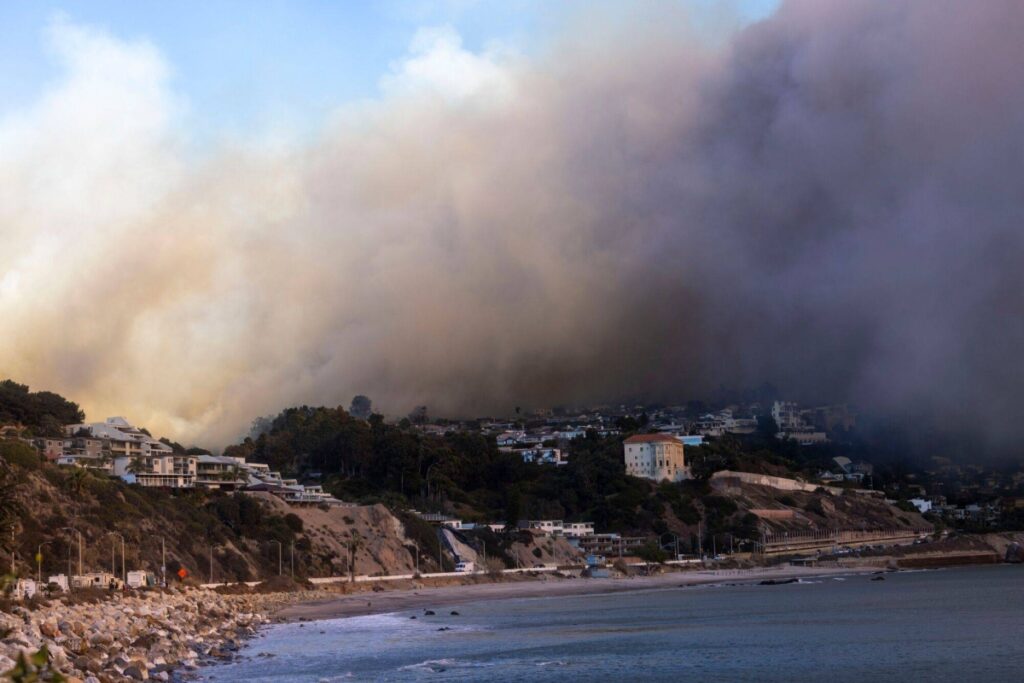
Scientists aboard the research vessel Reuben Lasker were conducting surveys of marine life off the Southern California coast in early January when ash from the Los Angeles wildfires began to rain down on the ship. “It’s like a winter day with big, fluffy snowflakes falling around you, except these weren’t snowflakes,” said oceanographer Rasmus Swalethorp. “It didn’t smell like burned wood; it smelled very synthetic, like burned electronics.” Being in “the right place at a horrible time,” said Swalethorp, has given researchers a rare opportunity to collect real-time data on catastrophic urban wildfires’ effects on ocean ecosystems and commercially valuable fisheries. Even as climate change-driven wildfires burn ever-larger swathes of California, their impact on the ocean remains little studied. Increasingly fast-moving infernos can burn tens of thousands of acres within hours, but it can take months to launch expensive ocean-going scientific expeditions. The few existing studies mainly focus on marine effects from forest fires that combust organic matter. One paper on the 440-square mile (1,140 square kilometer) Thomas Fire in Southern California found that woodland ash that fell in the Santa Barbara Channel in 2017 promoted the growth of plankton. The more than 15,000 structures that burned in the LA fires, on the other hand, incinerated unknown amounts of plastic, pesticides, asbestos, herbicides and lithium-ion batteries, releasing carcinogenic clouds of ash that blew far out to sea. Source link

Uncategorized

Trump aid freeze stirs chaos before it is blocked in court

WASHINGTON – U.S. President Donald Trump’s attempt to freeze hundreds of billions of dollars in federal aid was temporarily blocked in court on Tuesday, even as it sowed chaos throughout the government and stirred fears that it would disrupt programs that serve tens of millions of Americans. Minutes before it was due to take effect at 5 p.m. eastern, a federal judge blocked Trump’s spending freeze that would have affected thousands of federal grant programs. U.S. District Judge Loren AliKhan granted a temporary halt after an advocacy group argued the freeze would devastate programs ranging from health care to road construction. The court will revisit the issue on Monday. Trump’s sweeping directive was the latest step in his dramatic effort to overhaul the federal government, which has already seen the new president halt foreign aid, freeze hiring and shutter diversity programs across dozens of agencies. Democrats castigated the funding freeze as an illegal assault on Congress’ authority over federal spending and said it was already disrupting payments to doctors and preschool teachers. Republicans largely defended the order as fulfilling Trump’s campaign promise to rein in the $6.75 trillion budget. Source link

Scroll to Top